
 |
| Radu-Vodă Monastery |
In the working session of May 22, 2014, which took place at the Patriarchal Residence, under the presidency of Patriarch Daniel, the Holy Synod of the Romanian Orthodox Church decided to register in the Calendar of the Romanian Orthodox Church the Holy Great Martyr Ephraim the New of Nea Makri, who had been previously canonized by the Ecumenical Patriarchate of Constantinople, and his feast day was designated for May 5.


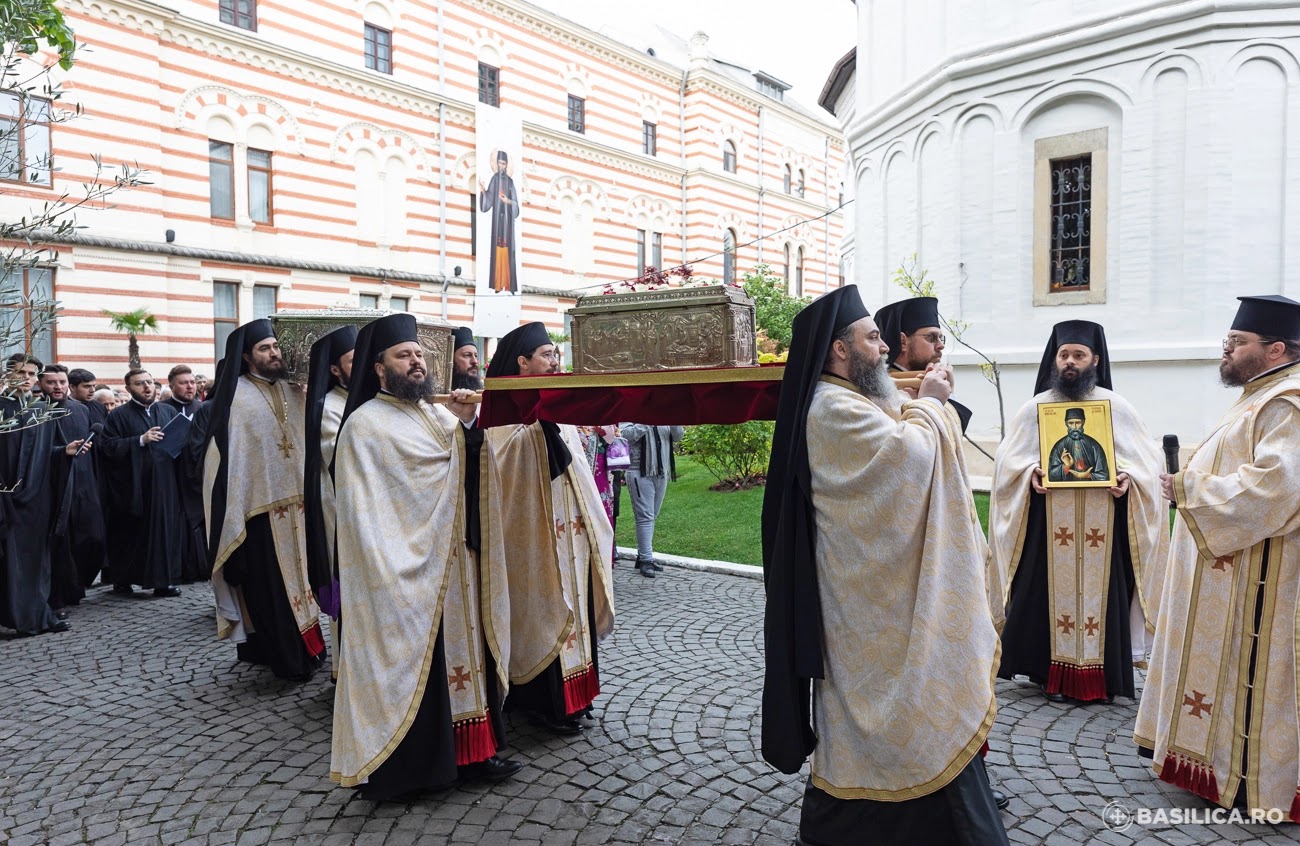
In the Archdiocese of Bucharest, parts of the relics of the Holy Martyr Ephraim the New are found at the historical Chapel of Saint George the Great Martyr within the Patriarchal Residence, as well as at the Radu-Vodă Monastery and at the Doamna Chiajna Monastery in Ilfov county. The Patriarchal Cathedral has the hand of the Saint.

A newly established parish by the Archdiocese of Bucharest in the town of Mogoşoaia, Ilfov county, is dedicated to Saint Ephraim the New. The Saint Dionisie Exiguul Monastery in Târguşor, Constanţa county, also has a second patron saint, Saint Ephraim the New. Thanks to the nuns from the Monastery of Nea Makri and the priest, the abbess gave to Dobrogea Monastery slippers that were put on the feet of Saint Ephraim, according to the tradition already there, and recently also a vestment. The consecration of this monastery began on the evening of Monday, May 4, 2015, when the Vigil service was held in honor of Saint Ephraim, performed by His Eminence Father Teodosie, Archbishop of Tomis. The garments that were on the holy relics of Saint Ephraim the New are placed in a specially made reliquary, consecrated by the local bishop on the occasion of the patron saint. In the Lower Danube Archdiocese, there are two churches that received the second patronage in honor of Saint Ephraim the New: the Church of Saint Demetrios the Great Martyr Myrrhgusher in Galaţi and the Church of Saints Nektarios and Saint Ephraim in Bărboşi.

In 2021, the church of the Hermitage of Saint Ephraim the New in the locality of Cristian, Brașov county, was consecrated on Saint Thomas Sunday by Archbishop Laurențiu of Sibiu and the Metropolitan of Transylvania. The consecration service was attended by pilgrims and believers from Brașov and the localities close to the monastic settlement, which was built since 2016 a few kilometers from the town below Tâmpa.

