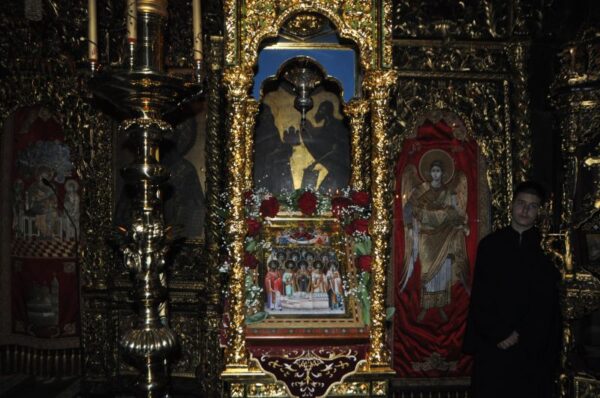
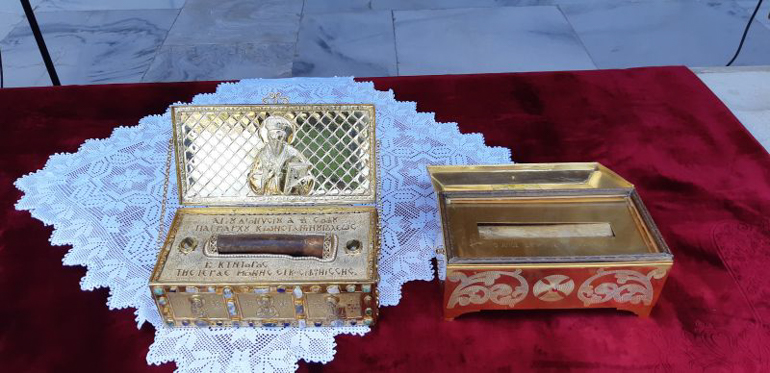
In 1472 the retired Saint Dionysios I, Patriarch of Constantinople, made his residence in the Sacred Monastery of Panagia Eikosifoinissa in Serres. During his long stay at the Monastery, he erected many new buildings and repaired old ones. In his time the Monastery acquired great prosperity and glory. Thus, according to information from a chronicle of the 16th century, in the year 1507, 24 hieromonks, 3 hierodeacons and 145 monks lived in the Monastery, i.e. a total of 172. They would go through Eastern Macedonia and Thrace, strengthened Christians in their faith and prevented conversions to Islam. This action of theirs caused the wrath of the Turks, who on April 24, 1507 slaughtered all 172 monks. They did not destroy the temple and the buildings, but the Monastery remained deserted and uninhabited for 13 years.
After the tragic event of the massacre, the Ecumenical Patriarchate succeeded in 1510 (or according to others in 1520) to receive permission from the Sultan for the reorganization of the Monastery. Thus, with the help of ten monks from Vatopaidi Monastery of Mount Athos, within ten years, 50 monks, deacons and hieromonks, who also had the governance of the Monastery, came to be monks at the Monastery.
In the years that followed, the Monastery had become the spiritual and national center of Eastern Macedonia and Thrace.
The commemoration of this slaughter of the 172 Venerable Fathers takes place annually on Thomas Sunday.
After the tragic event of the massacre, the Ecumenical Patriarchate succeeded in 1510 (or according to others in 1520) to receive permission from the Sultan for the reorganization of the Monastery. Thus, with the help of ten monks from Vatopaidi Monastery of Mount Athos, within ten years, 50 monks, deacons and hieromonks, who also had the governance of the Monastery, came to be monks at the Monastery.
In the years that followed, the Monastery had become the spiritual and national center of Eastern Macedonia and Thrace.
The commemoration of this slaughter of the 172 Venerable Fathers takes place annually on Thomas Sunday.